
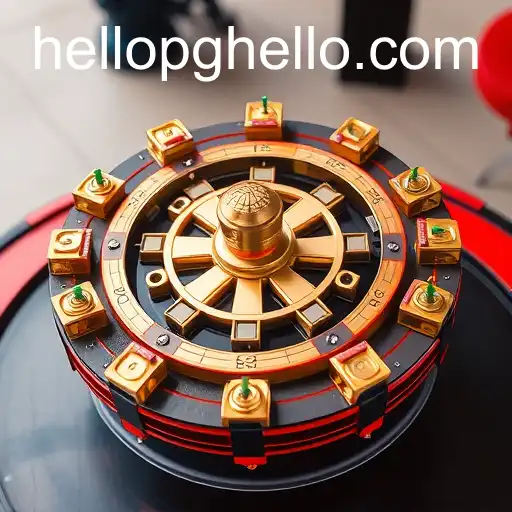
hellopg | Rotary Games: Engaging the World Through Rotation
hellopg’s Discover the captivating world of Rotary Games, where circular motion meets entertainment. Explore their mechanics, social impact, innovations, educational value, and cultural significance.
Exploring the Fascinating World of Rotary Games
An Introduction to Rotary Games
Rotary Games have become a prevalent form of entertainment that captivates a global audience. The term Rotary Games refers to a diverse array of activities facilitated by rotary movements, each offering a unique blend of strategy, coordination, and skill. Often embracing both traditional and modern elements, these games foster social interaction and friendly competition, making them a staple in various community settings.
Understanding the Mechanics
The mechanics of Rotary Games are centered around circular or rotational movements. Players are typically required to engage with devices that rotate, spin, or revolve as part of the gameplay. This element introduces a dynamic challenge, requiring participants to adapt their strategies accordingly. Whether using spinning tops, rotating boards, or intricate mechanical devices, the rotary aspect adds a level of unpredictability that keeps players engaged and entertained throughout.
Types of Rotary Games
Rotary Games come in many forms and can be categorized into several types based on their gameplay mechanics:
- Board-based Rotary Games: These involve a rotating board or platform where players move pieces according to specific rules. Examples include some adaptations of classic board games, where players must strategize with the changing game landscape.
- Mechanical Rotary Games: Often more complex, these games use intricate gears and mechanisms that the players interact with. This category includes some popular arcade games that utilize rotary controls to navigate challenges or complete tasks.
- Team-based Rotary Games: Played in a group setting, these games incorporate circular movements that require teamwork and coordination, such as relay races with a rotational twist.
The Social Aspect of Rotary Games
Rotary Games are more than just a pastime; they are social activities that bring people together. Whether at a family gathering, community event, or local fair, these games provide an opportunity for face-to-face interaction and communal enjoyment. The social element is a critical component, as players often engage in lighthearted banter, strategize together, and cheer each other on throughout the game's duration.
Additionally, Rotary Games serve as icebreakers, facilitating interaction among individuals who might not otherwise engage with each other. This social bonding aspect is particularly prominent in communal settings, where the shared experience of participating in a game creates lasting memories and strengthens community ties.
Innovation and Advancements
While Rotary Games have roots in traditional gameplay, recent advancements have pushed the boundaries of what these games can offer. Developers and designers continually innovate, introducing intriguing new formats that keep the domain fresh and exciting. By integrating modern technologies such as digital interfaces, augmented reality, and virtual reality, Rotary Games are evolving to enhance their immersive appeal.
For example, digital platforms allow for intricate rotary mechanics that translate into captivating virtual experiences. Meanwhile, the use of augmented reality can create hybrid games that merge physical and digital elements, offering an enriched layer of interaction and engagement. These advancements not only appeal to younger audiences but also broaden the scope and appeal of Rotary Games across varied demographics.
The Educational Value
Beyond entertainment, Rotary Games hold significant educational potential. These games often require critical thinking, problem-solving, and tactical planning, skills that are highly applicable in educational settings. Educators can leverage Rotary Games to teach concepts ranging from physics, by demonstrating centrifugal forces and motion dynamics, to mathematics, where rotational symmetry and calculations are explored.
Furthermore, certain board-based Rotary Games encourage knowledge acquisition and memory enhancement, making them valuable tools for cognitive development. This educational aspect positions Rotary Games as a viable supplement to traditional learning methods, offering a hands-on, engaging learning experience that can captivate and educate simultaneously.
The Cultural Impact
Rotary Games hold cultural significance in different parts of the world, often reflecting local customs, traditions, and heritage. In many cultures, these games are an integral part of festivals and public celebrations, embodying community values and fostering a spirit of camaraderie. As cultural artifacts, they tell stories of the people who created and played them, offering insight into their lives and societies.
Moreover, by incorporating elements from historical and traditional games, modern Rotary Games help preserve cultural heritage, allowing these traditions to evolve and remain relevant in contemporary settings. Thus, the impact of Rotary Games extends beyond entertainment, contributing to cultural preservation and appreciation.
